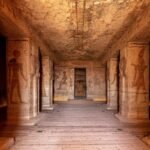
The right Egypt and Red Sea itinerary runs Cairo, then the Nile cruise, then the beach
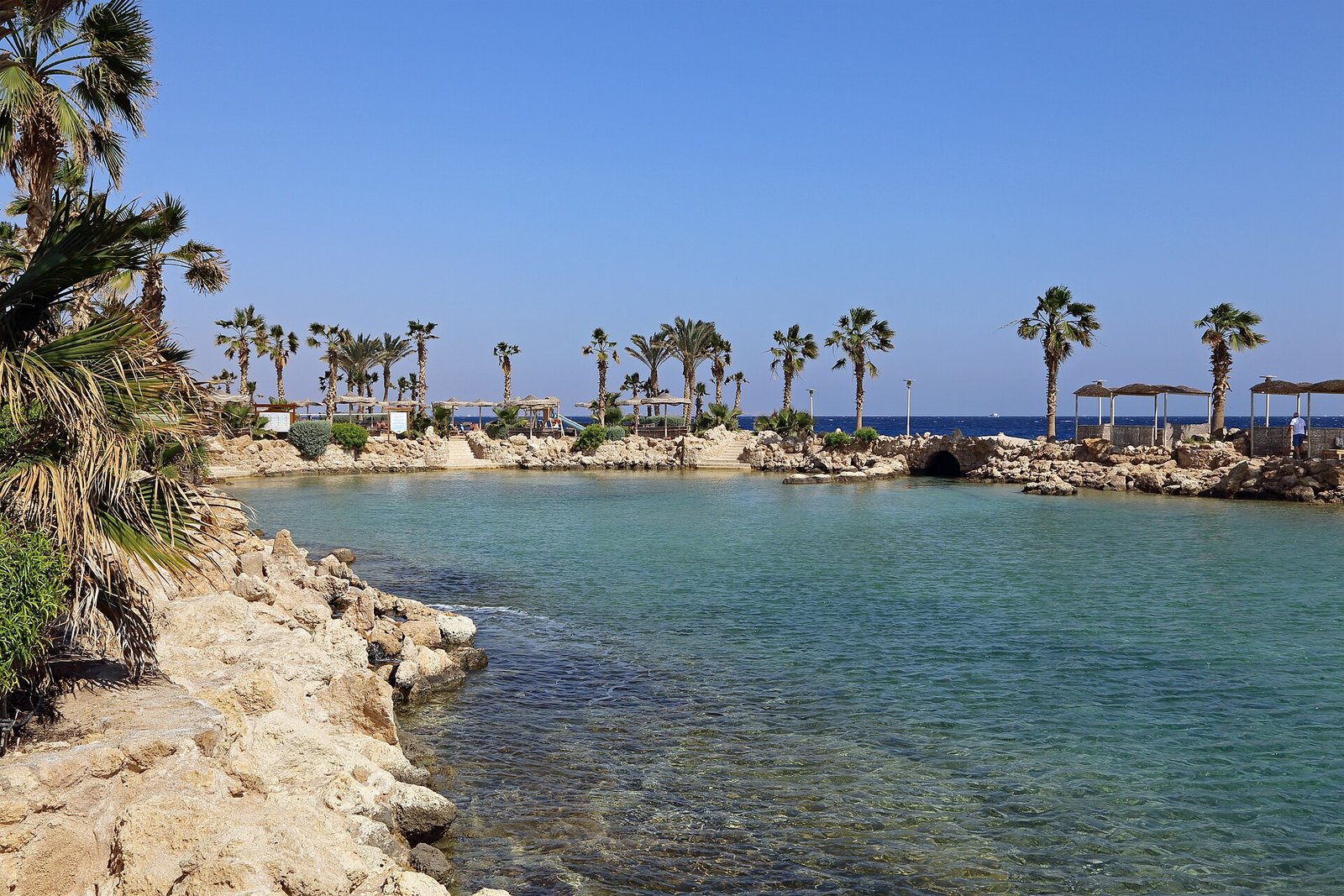
The right Egypt and Red Sea itinerary runs Cairo, then the Nile cruise, then the beach
The Egypt and Red Sea itinerary that works is culture first, beach last: two or three days in Cairo for the Pyramids and the museums, a four night Nile cruise between Aswan and Luxor, then three to five nights on the Red Sea at Hurghada, El Gouna, Sahl Hasheesh or Marsa Alam, or across the water at Sharm el Sheikh or Dahab. Ten days is the floor, twelve is comfortable, fourteen lets you dive properly. The join that makes it work is the road from Luxor to Hurghada, about four hours across the Eastern Desert, instead of a flight back through Cairo. Below: the day by day versions, the resort for each traveler, sea temperatures by season, and how we build it.
Why the culture goes first and the beach goes last
The Nile Valley is the demanding half of this trip. Giza at eight in the morning, the Valley of the Kings before the heat builds, a wake-up call in the dark for Abu Simbel, a couple of miles of temple floor a day. You want it in the first week, while you have the energy.
The Red Sea is the opposite kind of place. Nothing opens early, the reef is fifty yards off the beach, and the biggest decision of the day is whether to snorkel before or after lunch. Put it at the end and it works as decompression.
There is a third, technical reason. If you dive, you need a gap between your last dive and any flight. With the coast at the end, that gap is your last lazy day. At the start, it is a dead day before the flight to Luxor.
The itinerary block by block
Every version is the same three blocks in the same order; only their length changes.
Block one, Cairo, two or three days
The Pyramids and the Sphinx at Giza, the Grand Egyptian Museum for Tutankhamun, and either Islamic Cairo with the Khan el Khalili bazaar or Coptic Cairo. A third day adds Saqqara and the Step Pyramid, which most first-timers skip and later regret.
Block two, the Nile cruise, four nights
Fly Cairo to Aswan in the late afternoon and board that evening. Philae, the High Dam, Kom Ombo, Edfu, then the Luxor west bank with the Valley of the Kings and Hatshepsut, and Karnak. Abu Simbel is a pre-dawn road trip from Aswan if your version has room for it.
Block three, the coast, three to five nights
From Luxor by road to Hurghada, El Gouna or Sahl Hasheesh, or by a longer road to Marsa Alam. Or fly through Cairo to Sharm el Sheikh. Then a beach, a reef and a hotel that suits you.
One detail people miss: the cruise direction decides the transfer. If the boat ends in Luxor, you drive straight to the sea after breakfast. If it ends in Aswan, you first have to get back to Luxor, which costs a morning. That is why we book Aswan to Luxor when a trip finishes on the Red Sea.
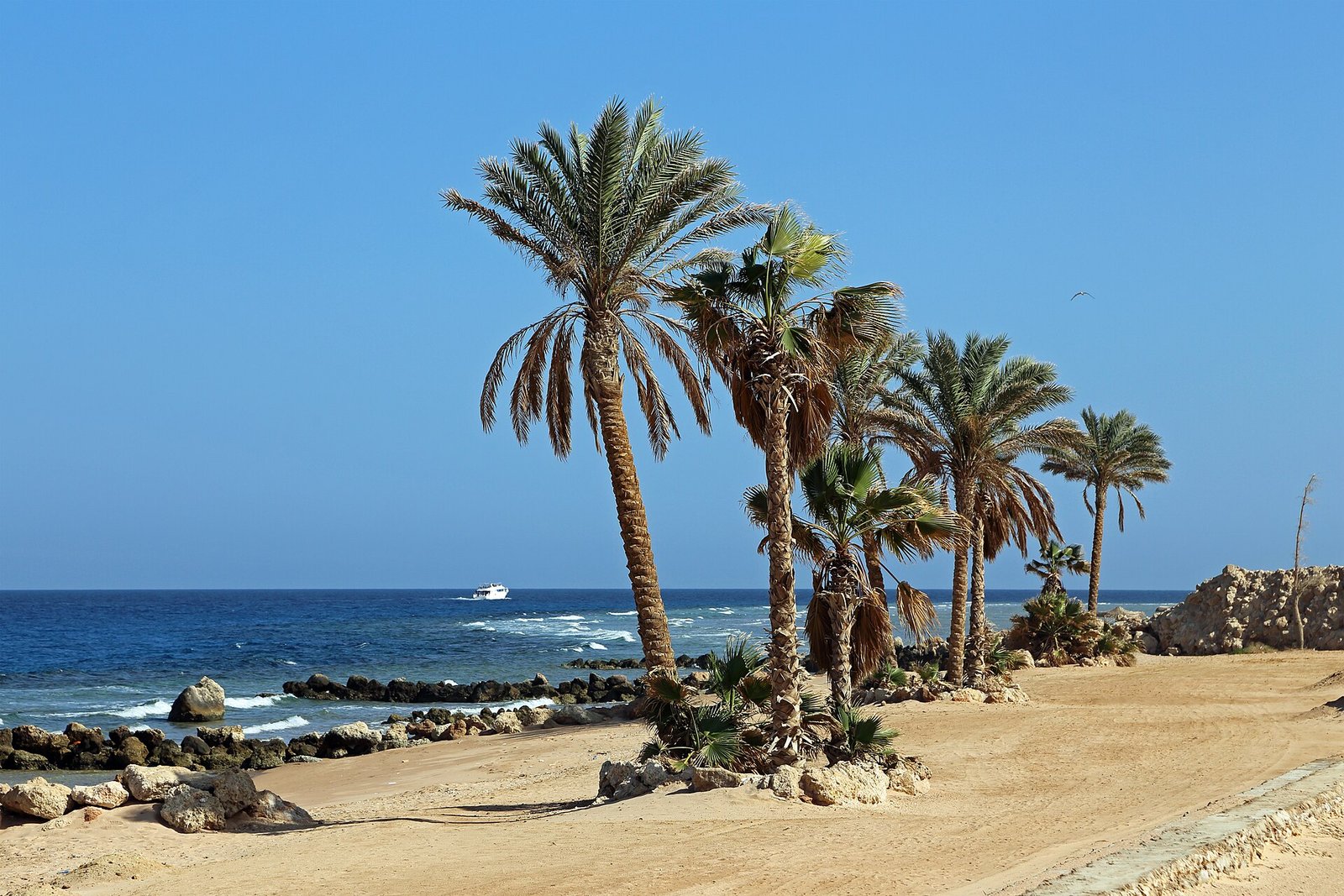
Luxor to Hurghada by road, or back through Cairo by air
This join makes or breaks the plan, and there are two ways to do it.
The road. Luxor to Hurghada is roughly 180 miles (290 km): east through Qena, across the Eastern Desert to Safaga, then north along the sea. In a private car with a driver it takes about four hours. You leave the boat after breakfast and are in the pool by mid afternoon. Marsa Alam is the same road plus an hour or two south. It is the route our Nile cruise from Hurghada guests use in the other direction, so it is well worn.
The air. There is no dependable direct service between Luxor and Sharm el Sheikh, so Sinai means Luxor to Cairo and then Cairo to Sharm, two legs with a wait between, in practice a full travel day. Our guide to domestic flights in Egypt explains how those connections work.
| Luxor to Hurghada by road | Luxor to Sharm through Cairo | |
|---|---|---|
| Time door to door | About 4 hours | 6 to 8 hours with the connection |
| Resorts it reaches | Hurghada, El Gouna, Sahl Hasheesh, Makadi Bay, Soma Bay, Marsa Alam | Sharm el Sheikh, then Dahab by road |
| Best for | Most itineraries, families | Divers set on Ras Mohammed and Tiran |
Unless you have a specific reason to be in Sinai, take the road and keep the day.
The 10, 12 and 14 day versions side by side
Each version starts the day you land in Cairo and ends the day you leave, from Cairo or straight from Hurghada, which has its own airport. The cruise runs Aswan to Luxor so the road transfer follows on.
| Day | 10 days | 12 days | 14 days |
|---|---|---|---|
| 1 | Land in Cairo | Land in Cairo | Land in Cairo |
| 2 | Giza, Sphinx, Saqqara | Giza, Sphinx, Saqqara | Giza, Sphinx, Saqqara |
| 3 | Grand Egyptian Museum, fly to Aswan, board | Grand Egyptian Museum, Islamic Cairo | Grand Egyptian Museum, Islamic Cairo |
| 4 | Philae, High Dam, sail | Coptic Cairo, fly to Aswan, board | Coptic Cairo, fly to Aswan, board |
| 5 | Kom Ombo, Edfu, sail to Luxor | Abu Simbel at dawn, Philae, sail | Abu Simbel at dawn, Philae, sail |
| 6 | Valley of the Kings, Hatshepsut, Karnak | Kom Ombo, Edfu, sail to Luxor | Kom Ombo, Edfu, sail to Luxor |
| 7 | Leave the boat, road to Hurghada | Valley of the Kings, Hatshepsut, Karnak | Valley of the Kings, Hatshepsut, Karnak |
| 8 | Red Sea, snorkel boat | Leave the boat, road to Hurghada or El Gouna | Balloon at dawn, Medinet Habu, Luxor Temple |
| 9 | Red Sea, free day | Red Sea, snorkel boat | Road to Hurghada, Sahl Hasheesh or Marsa Alam |
| 10 | Depart via Hurghada or Cairo | Red Sea, dive or desert afternoon | Red Sea, first dive day |
| 11 | Red Sea, free day | Red Sea, boat day | |
| 12 | Depart via Hurghada or Cairo | Red Sea, free day | |
| 13 | Last dive early, dry afternoon | ||
| 14 | Depart via Hurghada or Cairo |
Ten days works if the beach is a rest, not a project: three nights, one boat trip, a lot of pool. Twelve is the version we build most often, because Cairo gets its third day and the coast a real four nights. Fourteen is for divers, for a family that wants a slow week by the water, or for the Luxor west bank done properly.
Which Red Sea resort for which traveler
The six bases are not interchangeable, and the usual mistake is picking one by the name you have heard rather than by the kind of trip you are on.
| Base | How you get there | What it feels like | Best for |
|---|---|---|---|
| Hurghada | 4 hours by road from Luxor, own airport | Big resort town, marina, restaurants, every excursion boat | Families, a first Red Sea trip, the shortest transfer |
| El Gouna | 30 minutes north of Hurghada | Planned lagoon town, canals, kite beaches | Couples, kitesurfers, a walkable town without hustle |
| Sahl Hasheesh | 20 minutes south of Hurghada | Gated bay, large resorts, calm shallow water | Families with small kids, honeymooners |
| Marsa Alam | 5 to 6 hours by road from Luxor, own airport | Remote, house reefs off the beach, turtles, dugongs | Divers and serious snorkelers |
| Sharm el Sheikh | Two flights through Cairo | The Sinai hub, Naama Bay, big resorts, Ras Mohammed and Tiran | Divers who want the walls and accept the flights |
| Dahab | 1 hour by road from Sharm | Laid-back town, seafront cafes, the Blue Hole | Independent travelers, freedivers |
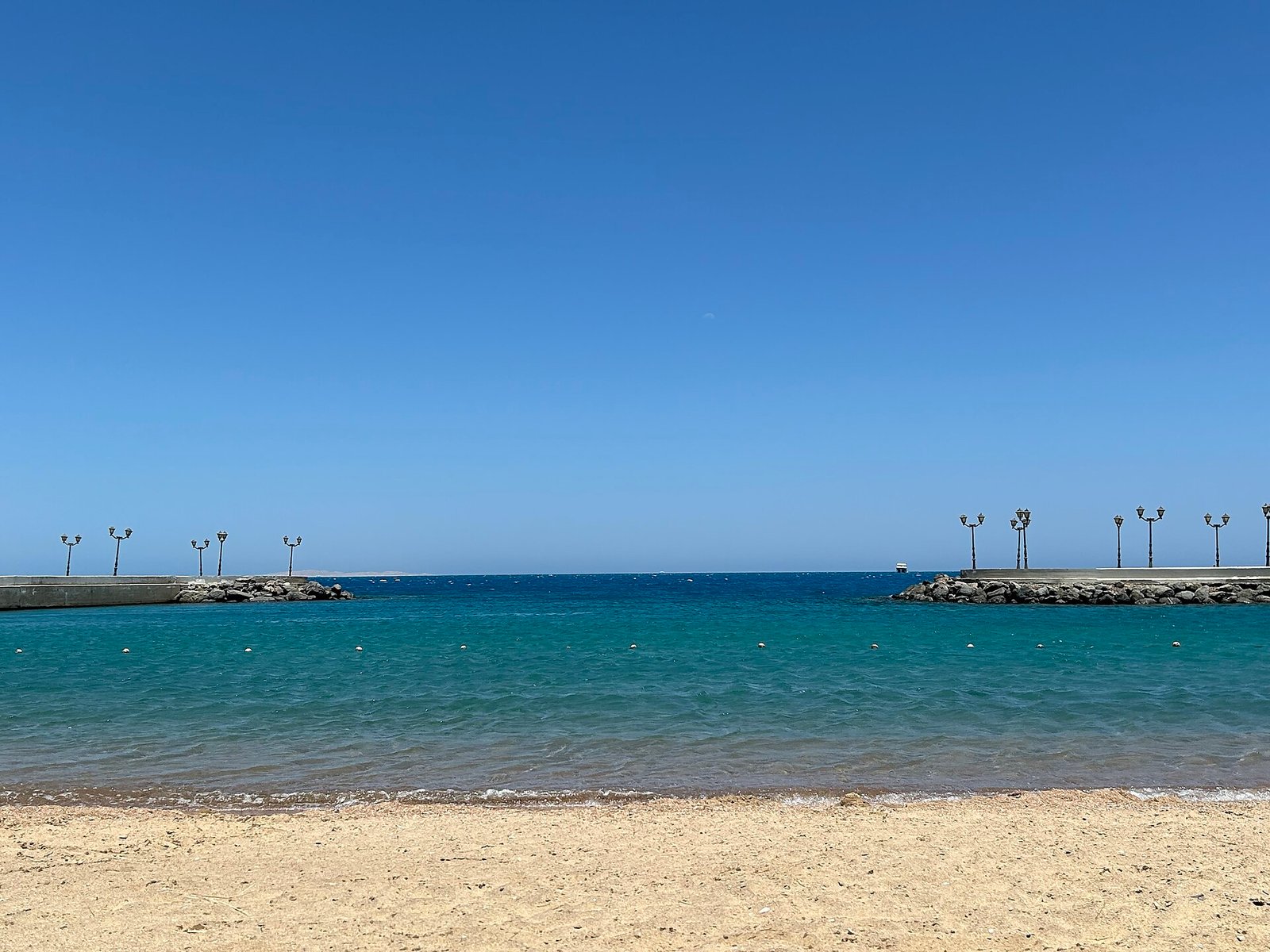
For most Nile-first itineraries the answer sits within twenty miles of Hurghada. The town is the practical choice, and what to see in Hurghada shows there is more to it than the hotel strip. El Gouna is where we send couples who want to walk to dinner along a canal. Sahl Hasheesh is where we send parents who want knee-deep water a long way out.
If the reef is the point, Marsa Alam beats everything on the mainland and is still reachable by road from Luxor. If it is the Sinai walls you want, read our comparison of Hurghada or Sharm el Sheikh first, because the transfer difference is a full day of your trip.
How many nights the beach block really needs
There is a floor below which the transfer is not worth it.
- Two nights is the minimum and only works as a rest before the flight home: one real day.
- Three or four nights is where it starts to pay: two or three boat trips or dives, one day of nothing, pool time between. This is the 10 and 12 day block.
- Five or more nights opens up an Open Water course, consecutive dive days, a desert jeep trip, or a split between El Gouna and Marsa Alam.
And our rule: if adding the coast pushes the Nile block below two Cairo days and a four night cruise, leave the sea for another trip. A compressed circuit plus two beach days pleases nobody.
When beach first actually makes sense
Here are the cases where we flip the order, and what you give up.
- Heavy jet lag. If you know you will be useless for two days after the journey, a soft landing by the sea and then Cairo with a clear head is a fair trade.
- A fixed cruise departure. Dahabiya sailboats and some smaller boats leave on set days. If that sailing falls late in your dates, the beach slides to the front.
- Young children. Some families want the kids settled and sun-tired before the museum days. It works if the parents accept a busier final week.
- Several dive days. With the sea first, the no-fly gap after your last dive is absorbed by the road to Luxor.
The cost is that the hardest days land when you are most tired, and the trip ends in Cairo traffic rather than on a sunbed. If none of the four applies, keep the standard order.
Seasons and sea temperature, in Fahrenheit and Celsius
The two halves like different weather. The Nile Valley is a winter destination; the Red Sea is swimmable every month and warmest when Luxor is at its worst. Typical daytime figures:
| Season | Luxor air | Hurghada air | Sea | How it plays |
|---|---|---|---|---|
| December to February | 72 to 77 F (22 to 25 C) | 68 to 72 F (20 to 22 C), breezy | 71 to 73 F (22 to 23 C) | Ideal for temples. Swimmable with a shorty wetsuit. |
| March to May | 82 to 97 F (28 to 36 C) | 75 to 88 F (24 to 31 C) | 73 to 78 F (23 to 26 C) | The sweet spot for the combination, March and April above all. |
| June to August | 104 to 108 F (40 to 42 C) | 93 to 99 F (34 to 37 C) | 82 to 84 F (28 to 29 C) | Hard on the Nile, superb in the water. |
| September to November | 84 to 99 F (29 to 37 C) | 79 to 91 F (26 to 33 C) | 79 to 82 F (26 to 28 C) | October and November are the best all-round months. |
Two things the table cannot show. Hurghada and El Gouna are windy, which is why the kitesurfers are there, and a winter northerly can make a boat day choppy; Marsa Alam and Sahl Hasheesh are more sheltered. And in winter the water feels colder than the number because you climb out into wind, so pack a rash guard. For holidays and how Ramadan changes the cultural days, our guide to the best time to visit Egypt goes month by month.
What changes in your suitcase, and the one diving rule
Things you notice once you are standing on a coral shelf in flip-flops.
- Two wardrobes. Shoulders and knees covered for temples, mosques and Cairo streets; swimwear for the hotel. Pack them as two separate layers.
- Water shoes. On much of this coast you enter the water over coral and rock, not sand. A cheap pair of reef shoes changes the beach block.
- Insurance that names diving. Check that your policy covers it explicitly, including hyperbaric treatment. Many exclude it.
- The no-fly gap. After your last dive, leave a full day before the Hurghada to Cairo flight, which is why day 13 of the 14 day version is a morning dive and a dry afternoon.
And one expectation to reset. The Red Sea is a reef sea, not a surf sea. The beauty is under the surface a few yards off the shore, and it is among the best on the planet. Arrive with a mask and reef shoes and you will understand why divers move here.
How Explora Egipto builds this itinerary
We are a local agency in Egypt with our own guides and vehicles, and this is the trip we assemble more than any other for American travelers.
- You tell us your dates, who is traveling, whether anyone dives, and whether the beach is a rest or the point.
- We set the cruise to end in Luxor, so the road to the coast follows on with no wasted morning.
- Our own driver meets you at the boat and takes you to the sea, so nobody waits for a third party.
- We match the base to the traveler, and tell you plainly if we think you have chosen the wrong one.
- Domestic flights, the Egyptologist guide on every cultural day, entry tickets and one WhatsApp thread, inside one quote.
There are no prices on this page because the same twelve days vary a lot with the boat, the resort and the month. Ask us for the quote and you get one number for the whole trip, with the itinerary day by day.
Frequently asked questions
How many days do you need for Egypt and the Red Sea?
Ten days is the realistic minimum: two in Cairo, a four night cruise, three nights on the coast and the travel days at each end. Twelve is comfortable and is what most people book, with a third Cairo day and four nights by the sea. Fourteen lets you dive on several days and add Abu Simbel and a second Luxor day. Under ten, drop the beach and do the Nile properly.
Is it better to do the Nile cruise or the beach first?
Cairo and the cruise first, the beach last, almost every time. The cultural days are the demanding ones, with early starts and a lot of walking, and you want them while you are fresh. The sea then works as the wind-down before you fly home. The exceptions are heavy jet lag, a cruise that sails on a fixed day late in your dates, or small children who need a soft landing.
Can you drive from Luxor to Hurghada after a Nile cruise?
Yes, and it is the best way to do it. The road runs east through Qena, across the Eastern Desert to Safaga and up the coast, roughly 180 miles and about four hours in a private car with a driver. You leave the boat after breakfast and check in by mid afternoon. Marsa Alam is the same road with an extra hour or two south. Sharm el Sheikh means two flights through Cairo.
Which Red Sea resort is best after a Nile cruise?
For most travelers, the Hurghada area, four hours by road from Luxor with every kind of hotel. El Gouna suits couples who want a walkable town, Sahl Hasheesh suits families who want calm shallow water, and Hurghada itself suits anyone who wants boats and restaurants on the doorstep. Divers should look at Marsa Alam. Sharm and Dahab are for people willing to fly for Sinai.
How warm is the Red Sea in winter?
Around 71 to 73 F (22 to 23 C) from December through February at Hurghada, a little warmer at Marsa Alam. That is swimmable, and visibility is often at its best, but the wind when you climb out makes it feel colder, so pack a shorty wetsuit or rash guard. By late April the sea is in the high 70s F (25 to 26 C), and from June to October in the low 80s F (28 to 29 C).
Can I dive on the Red Sea and fly home the next day?
Only if the flight is late enough. Dive centers ask for a substantial gap between your last dive and any flight, longer after several days of diving, and the domestic hop from Hurghada to Cairo counts. The clean way is the one we use: last dive in the morning of your second-to-last day, a dry afternoon, then travel the following day. Tell us you are diving and we lay the days out accordingly.
Cairo, the Nile and the reef, in the right order
Tell us your dates, who is coming and whether the beach is a rest or the point, and we come back with the itinerary written day by day: Cairo, the cruise ending in Luxor, our driver to the coast, the resort that fits you and the domestic flights placed. One quote for the whole trip and a single WhatsApp thread to the last day by the water.